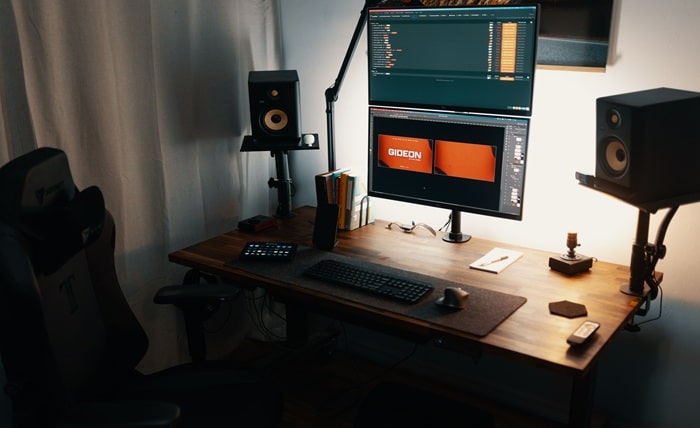
If you are running a one-person business or building a solo brand, you’ve likely stumbled into the “Productivity Tool Trap.”
It usually starts with noble intentions: You want to post content consistently across three social platforms, publish a weekly newsletter, and keep your blog updated with SEO-rich guides. To help manage the workload, you sign up for a project management board, an automated scheduler, two specialized AI tools, a visual design suite, an analytics dashboard, and a digital notebook.
Fast forward three weeks. Instead of spending your mornings writing or recording, you spend two hours updating color-coded Kanban boards, organizing tag hierarchies, and troubleshooting integrations.
You haven’t built a content business; you’ve built an administrative nightmare.
The harsh truth of solo content creation is that complexity is the enemy of consistency. Every extra click, password, tab, and configuration between your brain and the publish button adds friction. When you’re running the whole show yourself, friction leads directly to creative fatigue and burnout.
To publish daily without losing your mind, you don’t need a 12-app software stack. You need a Minimalist Content Engine—a streamlined, 4-layer system designed to minimize setup time and maximize creative output.
Here is how to build your minimalist tech stack and run a daily content pipeline with total efficiency.
The 4-Layer Minimalist Tech Stack
A functional solopreneur content engine requires only four operational layers: Capture, Drafting, Organization, and Distribution.
By assigning exactly one light, reliable tool to each layer, you eliminate decision paralysis and keep your workflow moving forward.
[ Layer 1: Capture ] ──> Fast, low-friction idea collection
│
▼
[ Layer 2: Drafting ] ──> Raw text & lightweight visual production
│
▼
[ Layer 3: Organization ] ──> Simple Kanban/Calendar planning
│
▼
[ Layer 4: Distribution ] ──> Automated scheduling & cross-posting
Layer 1: The Zero-Friction Capture Vault
The biggest hurdle to daily content creation isn’t lack of time—it’s starting from a blank screen. If you sit down at 9:00 AM wondering “What should I post today?”, you’ve already lost the battle.
To solve this, your capture tool must have zero entry friction. It needs to open instantly on your phone or desktop so you can record an idea before it disappears.
- Recommended Minimalist Tools: Apple Notes, Notion (Quick Capture page), or Obsidian.
- The Rule: Do not organize ideas while capturing them. Do not assign tags, post dates, or categories during the day. Simply record the raw thought, screenshot, or customer quote in a single bulleted inbox list.
When your capture tool is effortless to use, your idea vault fills itself while you go about your work day. When it’s time to write, you simply pick a validated idea from your pre-filled list.
Layer 2: The Production & Drafting Workshop
Once an idea is selected, you move into production. Solopreneurs often fall into the trap of using heavy, feature-loaded software for simple drafting tasks. Keep your writing environment clean and distraction-free.
A. Written Content
Use a plain Markdown editor or a minimalist text canvas (such as Typefully, iA Writer, or standard Notion pages). Avoid complex word processors with rich text toolbars that tempt you to format fonts and margins while you’re still trying to get your thoughts onto the page. Write first; format later.
B. Visual Assets & Micro-Graphics
Text-heavy content builds authority, but modern feeds demand visual variation. As a solo creator, you don’t have time to open heavy professional design suites every time you need a graphic for LinkedIn or X.
For lightweight graphics, quote cards, and social hooks, speed is everything. When you want to highlight an industry struggle or add a lighthearted beat to a tactical thread, you don’t need a full branding project. You can quickly use an intuitive online meme creator to pair a universally recognized template with a punchy caption reflecting your topic.
Dropping a quick visual joke or custom micro-graphic breaks up long walls of text, resets your reader’s attention span, and takes under two minutes to produce.
By keeping your visual asset creation fast and flexible, you avoid spending hours tweaking pixels when you should be hitting publish.
Layer 3: The Modular Content Calendar
Many solopreneurs spend more time managing their content calendar than actually creating content. A minimalist calendar should tell you three things at a glance:
- What is currently being drafted?
- What is scheduled for this week?
- What anchor asset is coming out next?
- Recommended Minimalist Setup: A single Trello or Notion board with four simple columns:
- Ideas Bank (Filtered from your Capture Vault)
- In Progress (Max 2 items at a time)
- Ready / Scheduled
- Published / Archive
Resist the urge to add 15 custom properties to your cards. Stick to the essentials: Title, Target Platform, Publish Date, and Asset Link.
Layer 4: The Automated Distribution Pipeline
Creating great content is only half the job; getting it in front of people is the other. Manually logging into four social platforms every afternoon to copy, paste, and post is a recipe for distraction. Once you open a social app natively, it’s almost impossible not to get sucked into scrolling.
Use a single scheduling hub to handle your queue:
- Recommended Minimalist Schedulers: Buffer, Publer, or Typefully.
- The Repurposing Loop: When you finish a long-form article or newsletter, immediately break it down into 3–5 micro-assets (a bulleted thread, a visual graphic, a carousel summary, and a quick takeaway tip). Schedule them to drip out over the next two weeks.
By batch-scheduling your posts once or twice a week, you disconnect creation from distribution. Your social channels stay active every day while you remain focused on deep, uninterrupted work.
The Solopreneur Daily Routine: A 90-Minute Blueprint
Having a minimalist tech stack is useless if you don’t have a repeatable operational routine. Here is a practical, 90-minute daily schedule that keeps your content pipeline full without taking over your business.
┌─────────────────────────────────────────────────────────┐
│ THE 90-MINUTE DAILY WORKFLOW │
├───────────┬─────────────────────────────────────────────┤
│ 15 Mins │ Inbox Review & Idea Selection │
│ 60 Mins │ Deep Focus Drafting (Text + Visual Assets) │
│ 15 Mins │ Formatting, Queueing & Scheduling │
└───────────┴─────────────────────────────────────────────┘
Step 1: Idea Selection (15 Minutes)
Open your Capture Vault. Scan your raw notes from the past few days. Choose one single idea that feels exciting or addresses a specific question a client asked you recently. Move that card into your In Progress column.
Step 2: Deep Focus Production (60 Minutes)
Turn off notifications. Write your primary asset (whether that’s a newsletter section, a LinkedIn post, or a blog outline). Draft the text first, then create any supporting micro-graphics or visual elements needed to support the piece.
Step 3: Queue & Automate (15 Minutes)
Copy your finished text into your scheduler, attach your visual assets, check your links, and set the publish date. Move your project card to Scheduled.
Shut down your creation tools for the day and return to running your core business.
3 Core Principles for Maintaining Tech Stack Hygiene
To prevent your minimalist system from bloating over time, follow these three operational rules:
- The One-In, One-Out Rule: Before adding a new software tool to your stack, you must eliminate or replace an existing one. If you want a new scheduling tool, cancel your current one first.
- Never Automate What You Haven’t Standardized: Don’t build complex multi-step Zapier workflows until you’ve performed the task manually for at least four consecutive weeks. Automation should streamline an established habit, not replace a missing process.
- Prioritize Speed Over Perfection: Perfect is the enemy of published. A clean 80% post published on time beats a 100% perfect draft sitting in your private notes app forever.
Stop Tinkering, Start Publishing
The goal of a solopreneur content engine isn’t to build the most sophisticated tech setup on the internet. The goal is to build a low-stress system that lets your expertise shine reliably day after day.
Take a look at your current software stack today. What apps are you paying for that only add noise to your workflow? Which steps are causing you to procrastinate?
Strip away the unnecessary tabs, consolidate your tools down to the essentials, and let your minimalist engine do the heavy lifting. Your time, your energy, and your audience will thank you for it.
What does your current content creation stack look like? Are there tools you’ve recently cut to simplify your daily workflow? Let’s swap notes in the comments below!