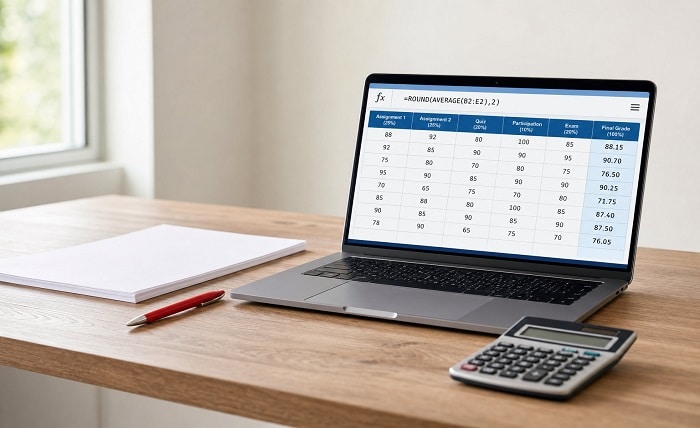
Automating grade calculations is transforming classroom management by relieving teachers from tedious arithmetic. When done right, automation promotes accuracy, transparency, and fairness for all students. This article explains how automated grading tools support efficient, accountable education practices.
Grade calculation has long been a source of stress for educators, frequently consuming hours outside planned instruction. Some organizations that support schools, such as providers like a Toronto recruitment Agency, have recognized the value in systems that handle the complexities of weighted categories, late penalties, and extra credit in a reliable and consistent manner. Automated grade calculations allow teachers to focus on assessment design and student feedback, rather than repetitive arithmetic. By streamlining the grading process, educators can maintain fairness and clarity for students and families alike.
Manual grade calculation creates workload pressure
Many teachers face heavy administrative burdens from tracking multiple assignments, applying various weighting rules, and managing make-ups or extra credit. These repetitive tasks can lead to errors, particularly when each term introduces exceptions or revised school policies.
Even small miscalculations can impact student outcomes, sometimes raising concerns about fairness or trust in the grading process. Manual gradebooks increase the risk of mistakes, especially when updating scores for late submissions, adjustment of penalties, or granting exemptions.
Understanding practical grade automation in classrooms
Automating grade calculations means more than shifting records online. In practice, it involves creating digital grading schemas that apply preset formulas to weighted categories, point-based assignments, and standards-based conversions.
Modern tools allow teachers to define how to drop the lowest scores, handle assignment retakes, and manage exemptions systematically. This helps ensure that each adjustment is applied consistently and that students are graded according to set rules, not individual oversights or manual recalculations.
Accuracy and time savings with transparent grading
Automated processes apply grading criteria the same way for every student, reducing disputes and increasing confidence in results. By maintaining a transparent, predictable system, it is easier to resolve queries from students and families quickly, since every formula or adjustment is documented.
Time previously spent recalculating grades can be focused on reviewing student work or preparing lesson materials. Guidelines can be embedded alongside grade calculations, clarifying how late penalties or extensions are managed and minimizing confusion.
Safeguarding professional judgment and equity
It is important to remember that automating grade calculations means automating arithmetic and record-keeping, not the assessment of student performance. Rubrics, interpretation of borderline cases, and the delivery of meaningful qualitative feedback all continue to require teacher insight.
Consistent automation helps ensure that accommodations are applied fairly, regardless of assignment or student. Transparent processes also minimize the risk of hidden penalties that may arise from inconsistent manual grading, helping to protect equity throughout the classroom.
Practical steps for reliable implementation
Successful automated grading depends on correctly setting up calculation rules, aligning them with school policies, and checking outputs for accuracy. Even small configuration errors can affect results, so regular spot-checking or audit trails should be part of the process.
Privacy and security are essential when storing student data. Limiting data storage, controlling user access, and clearly documenting each calculation rule can help protect student information and support clear communication with families.